
Family court: understanding the Welfare Checklist – What every parent needs to know when navigating parental separation
When parents separate, one of the most pressing concerns for is how decisions about their children will be made. Whether you’re considering mediation, preparing for court, or simply trying to understand your options, the Welfare Checklist is a fundamental framework that puts your child’s needs at the centre of every decision. In this comprehensive guide, we’ll explain what the Welfare Checklist is, why it matters, and how understanding it can help you make better decisions for your family’s future.
What is the Welfare Checklist?
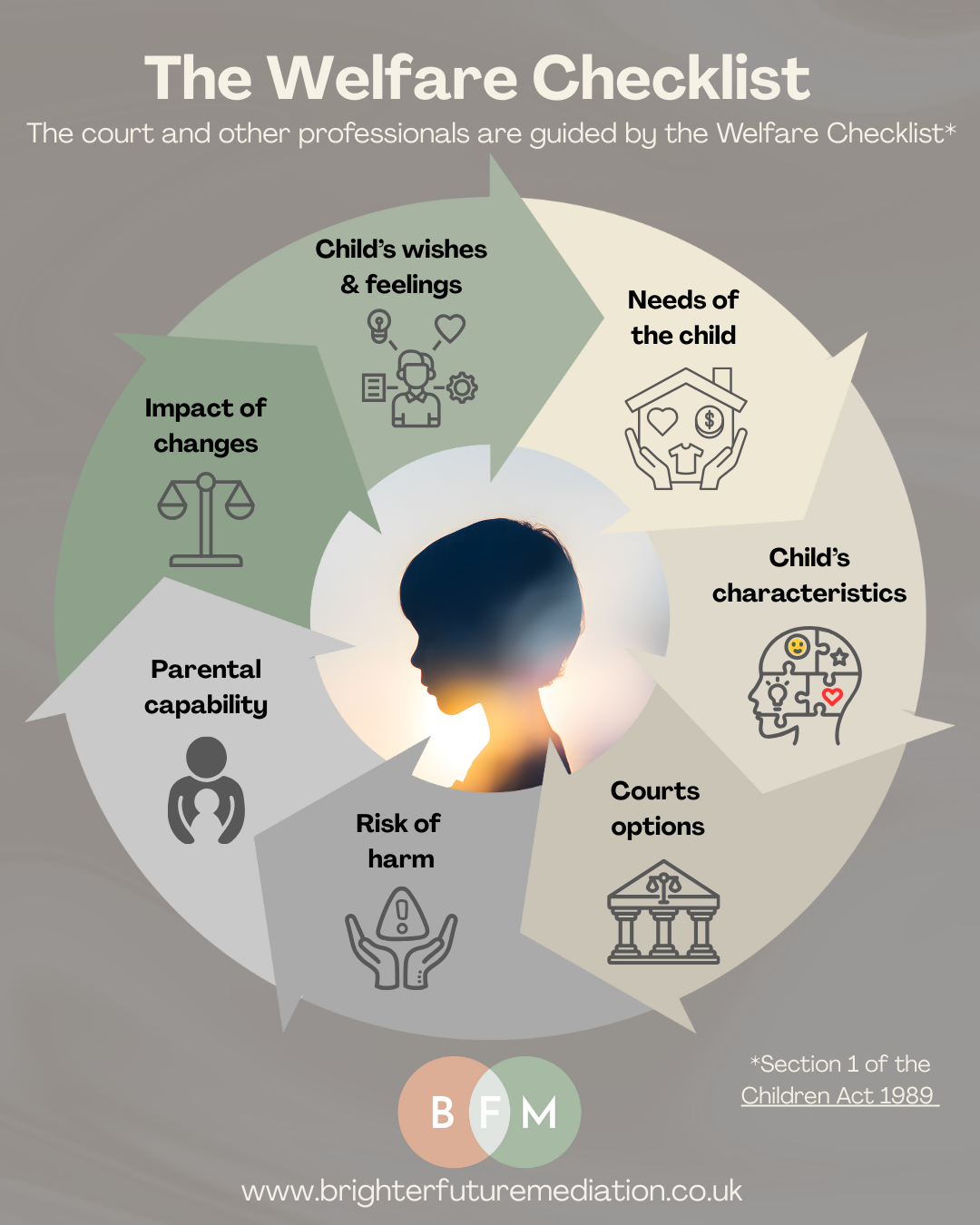
The Welfare Checklist is a legal framework established by Section 1 of the Children Act 1989, which requires courts and professionals to consider seven specific factors when making decisions about children. This isn’t just legal jargon, it’s a child-focused approach that ensures every decision prioritises what’s genuinely best for your children.
The fundamental principle is simple but powerful: the child’s welfare is paramount. This means that in any decision affecting your child, whether made by a judge, a mediator facilitating discussions, or parents themselves, your child’s wellbeing must come first.
According to the Children Act 1989 the checklist applies whenever a court is considering making, varying, or discharging orders under the Act. However, its principles extend far beyond the courtroom. Good mediators, solicitors, and other family professionals use the Welfare Checklist as a guide for helping parents reach agreements that truly serve their children’s best interests.
The seven factors of the Welfare Checklist explained
1. The child’s wishes and feelings
Children have a voice, and it matters. This factor recognises that children’s wishes and feelings should be heard and considered, taking into account their age and level of understanding.
What this means for you: While younger children may not fully understand complex situations, even toddlers can express preferences about routines and environments. Older children and teenagers often have clear views about arrangements that affect them. It’s important to listen to your children without putting them in the middle of adult conflicts or making them feel responsible for decisions.
In mediation, child-inclusive approaches can help bring your child’s perspective into discussions in an age-appropriate way. At Brighter Future Mediation, we offer child-inclusive mediation where trained professionals speak directly with your children (if appropriate) and feed their views into the mediation process without putting pressure on them. This is very different from asking children to choose between parents.
2. The child’s physical, emotional and educational needs
Every child has unique needs that must be met for them to thrive. This encompasses everything from basic necessities like food, shelter, and healthcare to emotional security, educational opportunities, and social development.
What this means for you: Consider the full picture of your child’s life. Do they have special educational needs that require specific school support? Do they have medical conditions requiring regular appointments? Are they involved in sports clubs, music lessons, or other activities that provide structure and friendship?
Emotional needs are equally important. Children experiencing family separation often need extra reassurance, stability, and clear communication. They need to know they’re loved by both parents and that the separation isn’t their fault. Research from organisations like the Children’s Commissioner consistently shows that children fare better when both parents remain positively involved in their lives.
In mediation sessions, we help parents create practical arrangements that address all these needs without the adversarial atmosphere of court proceedings.
3. The likely effect of any change in circumstances
Stability matters enormously to children. This factor requires consideration of how any proposed changes to a child’s living arrangements, schooling, or relationships might affect them.
What this means for you: Courts and mediators will look carefully at maintaining continuity where possible. This doesn’t mean arrangements can never change, but changes should be made thoughtfully with the child’s adjustment in mind.
For example, if a child has lived in the same area all their life, attended the same school, and has an established friendship group, proposing a move to a different city requires very careful consideration of the impact. Similarly, if a child has spent every weekend with their grandparents, suddenly ending this routine could be disruptive.
The ‘status quo’ carries weight, but it’s not absolute. If the current situation isn’t working or if a child’s needs have changed, modifications can and should be made. The key is to think through the impact and make transitions as smooth as possible.
4. The child’s age, sex, background and other characteristics
Children are individuals, and what works for one child may not work for another. This factor ensures that decisions are tailored to each child’s unique circumstances.
What this means for you: A 3-year-old has very different needs from a 13-year-old. Cultural, religious, and linguistic backgrounds may be important to maintaining a child’s sense of identity. Children with disabilities or neurodivergence may require specific accommodations.
For instance, a teenager preparing for GCSEs might benefit from minimal disruption during exam periods. A child from a bilingual household may need regular contact with both parents to maintain their language skills. A child with autism might need very clear, predictable routines to feel secure.
Understanding your individual child’s characteristics helps you create arrangements that work in reality, not just on paper. This is where mediation excels, because parents know their children best and can design bespoke solutions that courts simply cannot mandate.
5. Any harm the child has suffered or is at risk of suffering
Child protection is paramount. This factor requires consideration of any physical, emotional, or psychological harm the child has experienced or might experience, including harm from witnessing conflict between parents.
What this means for you: Harm isn’t limited to physical abuse. Research shows that children who witness domestic abuse or high-conflict parental arguments can experience significant emotional harm. According to Women’s Aid, domestic abuse affects approximately 1.9 million children in the UK.
If there are safeguarding concerns, these must be addressed before or during any mediation or court process. Reputable mediators are trained in safeguarding and will screen for domestic abuse before proceeding. At Brighter Future Mediation, we take safeguarding extremely seriously and conduct thorough assessments during the MIAM (Mediation Information and Assessment Meeting) process.
It’s worth noting that risk of harm also includes exposure to ongoing parental conflict. While you may be hurt and angry, continually arguing in front of your children or using them as messengers causes real harm. Finding ways to communicate civilly, even when separated, is part of protecting your children from harm.
6. How capable each parent is of meeting the child’s needs
Both parents’ ability to provide for their children’s needs is carefully considered. This isn’t about who earns more money or who has the bigger house, it’s about practical parenting capability.
What this means for you: Can you manage the school run? Can you prepare meals? Can you help with homework? Can you recognise when your child is unwell or distressed? Can you work cooperatively with the other parent for your child’s benefit?
Parental capability also includes emotional availability and the ability to support a child’s relationship with their other parent. A parent who consistently undermines the other parent or prevents contact is demonstrating poor capability, even if they’re excellent in other respects.
It’s important to be honest with yourself about your capacity. If you work long hours, you might need to think creatively about childcare. If you’ve never done the school run before, you’ll need to learn the routines. If you struggle with your own mental health, seeking support is a sign of good parenting, not weakness.
Mediation can help you have realistic conversations about these practical matters without judgment, focusing on solutions that work for everyone.
7. The range of powers available to the court
This final factor reminds decision-makers to consider all available options under the Children Act, not just the most obvious solutions.
What this means for you: If you do end up in court, judges have various orders they can make, from child arrangements orders (determining where a child lives and spends time) to specific issue orders (deciding particular questions) to prohibited steps orders (preventing certain actions).
However, here’s the crucial point: courts also have the power to make no order at all if they believe parents can work things out themselves. In fact, there’s a principle in the Children Act called the ‘no order principle’, which says courts shouldn’t make an order unless doing so would be better for the child than making no order at all.
This is why mediation is so powerful. When parents reach their own agreements through mediation, they maintain control and flexibility. You can create arrangements that work for your family’s unique circumstances without the rigid framework of a court order.
Why the welfare checklist matters in mediation
You might be wondering: if the Welfare Checklist is a legal framework for courts, why does it matter in mediation?
The answer is simple. While mediators don’t make decisions for you, they guide you through discussions using the same child-focused framework that courts use. This ensures that any agreements you reach are likely to be sustainable, appropriate, and genuinely in your children’s best interests.
The Family Mediation Council states that properly conducted mediation results in agreements in around 70% of cases. This is 82% for Brighter Future Mediation clients. These agreements work because they’re based on a thorough exploration of what children actually need, not just what parents initially wanted.
At Brighter Future Mediation, we structure our sessions around the Welfare Checklist, helping you work through each factor systematically. This means:
• You’ll consider your children’s wishes without putting inappropriate pressure on them
• You’ll identify all their needs, not just the obvious ones
• You’ll think through the impact of changes before making them
• You’ll recognise each child as an individual
• You’ll address any safeguarding concerns appropriately
• You’ll have honest conversations about parental capability
• You’ll create flexible arrangements that can adapt as your children grow
Applying the welfare checklist to your family’s situation
Understanding the theory is one thing, but how do you apply the Welfare Checklist to your own family’s situation? Here are some practical steps:
Start with a child-focused mindset
Before entering any discussions about arrangements, take time to shift your perspective from your own hurt feelings to your children’s needs. This isn’t easy when you’re going through separation, but it’s essential.
Ask yourself:
• What does a typical day/week look like for my child right now?
• What makes them feel secure and happy?
• What would they find most difficult about the separation?
• How can we minimise disruption while also making necessary changes?
Gather information systematically
Work through each element of the Welfare Checklist for each of your children individually. Create a document or notes covering:
• Your child’s routines, school, activities, friendships, and hobbies
• Any special needs, medical conditions, or support requirements
• Extended family relationships that are important to them
• Their relationship with each parent and what each parent provides
• Practical considerations like school locations, work schedules, and housing
This information forms the foundation for meaningful discussions in mediation.
Listen to your children (appropriately)
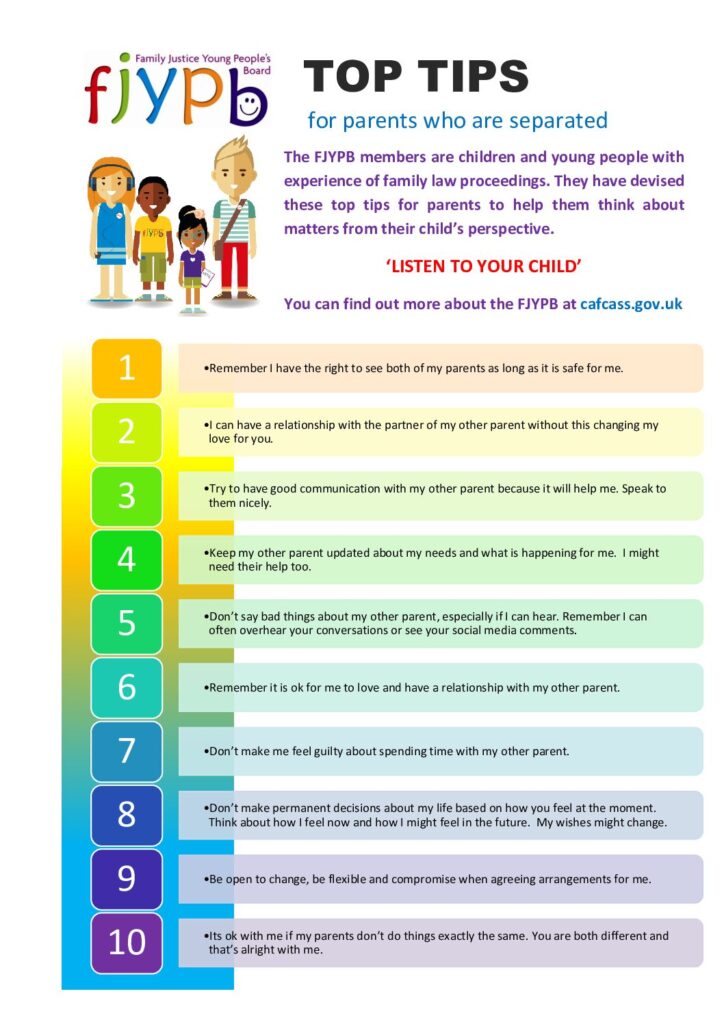
The Cafcass guidance on bringing the voice of the child into family proceedings emphasises that children want to be heard but not to make decisions. There’s a crucial difference.
Create opportunities for your children to express their feelings without pressure:
• Never ask them to choose between parents
• Let them know it’s okay to love both parents
• Listen to concerns about practical matters (school, friends, pets)
• Consider child-inclusive mediation for older children
• Reassure them that adults will make the final decisions
Be realistic about capabilities
Honest self-assessment is vital. If you’ve never done the school run because you work long hours, you’ll need a plan for how this will work. If the other parent has been the primary caregiver, you may need to build up gradually to longer periods of care.
Equally, be fair in assessing the other parent’s capabilities. Just because they haven’t done certain tasks during the relationship doesn’t mean they can’t learn. Many parents surprise themselves with what they can do when they need to.
Think long-term
The arrangements you make now should be able to evolve as your children grow. A schedule that works for a 5-year-old won’t necessarily work for a 15-year-old. Building in flexibility and committing to regular reviews helps ensure your arrangements remain appropriate.
Consider:
• How might your children’s needs change as they get older?
• What happens when they start secondary school, get part-time jobs, or want to spend more time with friends?
• How will you communicate about adjustments needed?
• What process will you use to make changes without going back to court?
The benefits of resolving arrangements through mediation
While understanding the Welfare Checklist helps in any context, using it within the mediation process offers significant advantages over court proceedings:
Speed and efficiency
According to Ministry of Justice statistics (gov.uk/government/organisations/ministry-of-justice), the average time from first application to final order in private law children cases is 43 weeks. That’s nearly a year of uncertainty for your children.
Mediation typically takes 1-3 months from first meeting to finalised agreement. Your children spend far less time in limbo, and you can start implementing arrangements that work much sooner.
Cost Savings
Legal representation through court proceedings typically costs £15,000-£30,000 per parent. Mediation costs a fraction of this, usually £1,000-£3,000 total for both parents combined.
At Brighter Future Mediation, we offer transparent pricing that’s 34% cheaper than traditional mediators, with longer 1.5-hour sessions giving you better value. We also help you access government vouchers worth £500 if you’re eligible, making mediation even more affordable.
Control and flexibility
In court, a judge who has never met your family makes decisions based on limited information heard over a few hours. In mediation, you remain in control of the outcome, creating bespoke arrangements that reflect your family’s unique circumstances.
You can build in flexibility that courts cannot order. For example, you might agree to alternate Christmas arrangements, accommodate work travel, or adjust timing during exam periods, all based on your actual lives rather than standard court orders.
Better outcomes for children
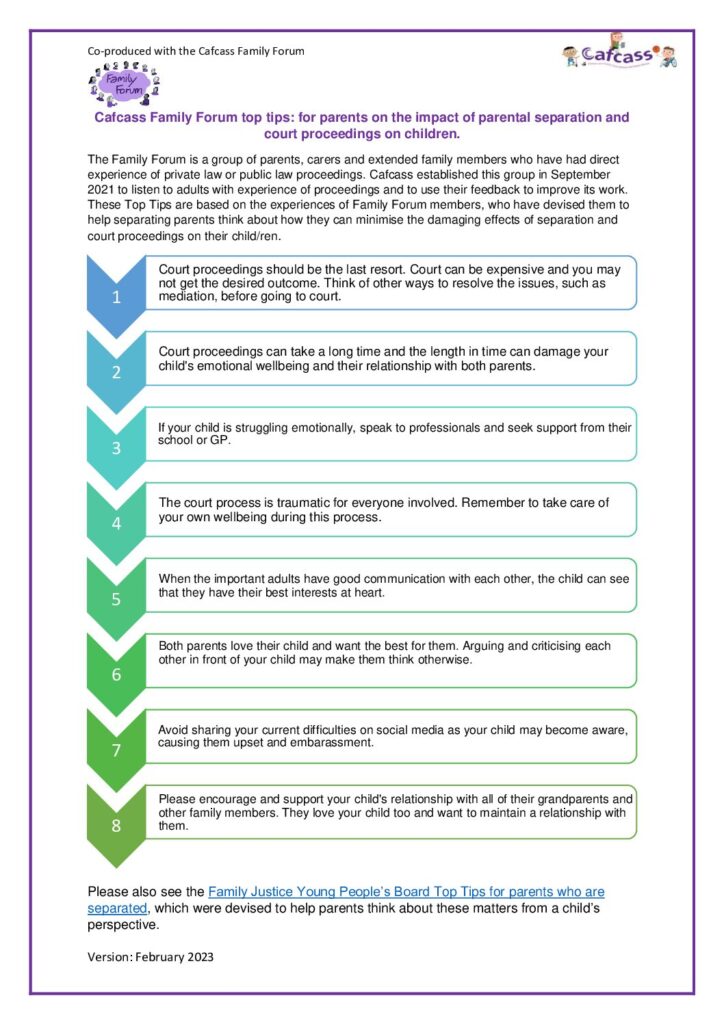
Research consistently shows that children whose parents cooperate have better outcomes than those whose parents remain in conflict. Mediation helps you develop a cooperative co-parenting relationship, which benefits your children not just now but throughout their childhood and beyond.
According to Resolution, the UK family law organisation, children are less stressed when their parents resolve matters outside court. The adversarial nature of court proceedings often entrenches conflict, whereas mediation encourages communication and problem-solving.
Privacy and dignity
Court proceedings are a matter of public record. Mediation is entirely confidential. The difficult details of your separation, your finances, your parenting disagreements, all remain private. This dignity matters, both for you and for your children as they grow older.
What happens if you can’t agree on everything?
It’s a common concern: what if we try mediation but can’t agree on everything?
First, remember that partial agreement is still progress. If you can agree on most issues through mediation, you’ll only need court involvement for specific outstanding matters. This is faster, cheaper, and less stressful than litigating everything.
Second, if mediation doesn’t result in agreement, you can still apply to court, and the mediator can provide a document confirming you’ve attempted mediation. Courts look favourably on parents who’ve made genuine efforts to resolve matters outside court.
Third, even when court proceedings become necessary, having worked through the Welfare Checklist in mediation means you’re much better prepared. You’ll understand what matters to focus on, what evidence might be needed, and how to present your case in a child-focused way.
Common misconceptions about the welfare checklist
Let’s address some common misunderstandings:
“Children always live with mothers”
This is not what the Welfare Checklist says. There is no presumption in favour of either parent. While statistically more children live primarily with mothers, this reflects historical patterns rather than legal requirements. Each case is decided on its individual merits based on the seven factors.
Many families now operate shared care arrangements where children spend substantial time with both parents. The question is always: what arrangement best meets this child’s needs?
“The parent with more money gets more time”
Financial resources are only relevant insofar as they affect a parent’s capability to meet children’s needs. A wealthier parent doesn’t automatically get more time. What matters is practical parenting ability, not income levels.
Children need stable housing and adequate resources, but they also need emotional availability, consistency, and genuine care. These aren’t bought with money.
“Children can choose at age 12/14/16”
There is no magic age at which children’s wishes become determinative. While older children’s views carry more weight (because they have greater understanding), even teenagers’ wishes are just one factor in the checklist, not the deciding factor.
Courts recognise that teenagers can be influenced, may not fully understand implications, or might make choices based on short-term preferences rather than long-term best interests. Their views matter, but adults still have responsibility for ensuring arrangements are appropriate.
“Following the Welfare Checklist means lengthy legal proceedings”
Not at all. The Welfare Checklist can be worked through efficiently in mediation, often in just a few sessions. It’s the adversarial nature of court proceedings that causes delays, not the checklist itself.
In fact, systematically considering each factor prevents time-wasting arguments about irrelevant issues and helps you focus on what actually matters for your children.
Your next steps: Putting the Welfare Checklist into practice
Understanding the Welfare Checklist is the first step. Putting it into practice is where families truly benefit.
If you’re facing separation and need to make arrangements for your children, starting with a MIAM (Mediation Information and Assessment Meeting) is now mandatory before applying to court in most cases. This requirement exists because mediation works and leads to better outcomes for families.
At Brighter Future Mediation, we’re passionate about helping families resolve arrangements using the Welfare Checklist as our guiding framework. Our approach is:
• Online and accessible – mediate from your own home with our secure video platform
• Trauma-informed – we understand that separation is difficult and approach every family with sensitivity
• Child-focused – we keep your children’s needs at the centre of every discussion
• Affordable – 34% cheaper than traditional mediators, with longer sessions and government vouchers available
• Efficient – most families reach agreement within 1-3 months
• Experienced – our mediators are FMC-registered professionals with extensive experience in family work
Our MIAM process includes a thorough assessment of your situation, an explanation of how mediation works, and a clear discussion of whether mediation is suitable for your family. We screen carefully for domestic abuse and safeguarding concerns, and we never proceed if mediation wouldn’t be safe or appropriate.
If mediation is suitable, we’ll work with you through each element of the Welfare Checklist, helping you create arrangements that genuinely work for your children. You’ll leave with a clear Parenting Plan or Memorandum of Understanding that can be made into a consent order if you wish.
The bigger picture: building a cooperative future
The Welfare Checklist isn’t just about making decisions today. It’s about establishing a framework for cooperative co-parenting that will serve your family for years to come.
When you work through the seven factors together in mediation, you’re not just resolving immediate issues. You’re learning to:
• Focus on children’s needs rather than parental conflict
• Communicate constructively about difficult topics
• Problem-solve together despite your differences
• Think practically and realistically
• Respect each other’s role in your children’s lives
These skills don’t disappear after mediation ends. They become tools you can use whenever circumstances change, whenever new issues arise, whenever your children’s needs evolve.
Parents who successfully mediate often report that they feel more confident about the future, even though their relationship has ended. They know they can work together when needed. They know they’re putting their children first. They know the arrangements they’ve created will work because they built them themselves rather than having them imposed.
Conclusion: The Welfare Checklist as your compass
The Welfare Checklist represents decades of learning about what children need when their parents separate. It’s not a rigid formula but a flexible framework that can adapt to every family’s unique circumstances.
The seven factors, wishes and feelings, needs, impact of change, characteristics, harm, capability, and available options, provide a comprehensive picture of your children’s lives and how to support them through this difficult transition.
Whether you resolve matters through mediation or, if necessary, through court, understanding and applying the Welfare Checklist helps ensure decisions are genuinely child-focused rather than driven by adult conflict.
At Brighter Future Mediation, we believe that most families can reach agreements that work when they have the right support and framework. The Welfare Checklist provides that framework. Our mediators provide that support.
If you’re facing decisions about your children’s future, we encourage you to start with mediation. Call us for a free consultation 0333 240 8038, and let us help you work through the Welfare Checklist in a way that honours your children’s needs and respects both parents’ roles.
Your children’s welfare is paramount, and putting that principle into practice starts with understanding the framework that protects them. The Welfare Checklist isn’t just law, it’s a promise to prioritise children’s needs above all else. Let us help you honour that promise.
Need support? We’re here to help
If you’re navigating separation and need to make arrangements for your children, Brighter Future Mediation offers:
• Free initial consultations to discuss your situation
• MIAMs available within days, not weeks
• Evening and weekend appointments available
• Support with accessing £500 government mediation vouchers
• Child-inclusive mediation options
• Ongoing support as your children grow and needs change
Key Resources and Further Reading
• Children Act 1989: www.legislation.gov.uk/ukpga/1989/41/contents
• Family Mediation Council: www.familymediationcouncil.org.uk
• Cafcass (Children and Family Court Advisory and Support Service): www.cafcass.gov.uk
• Resolution (family law organisation): www.resolution.org.uk
• Children’s Commissioner: www.childrenscommissioner.gov.uk
• Ministry of Justice statistics: www.gov.uk/government/organisations/ministry-of-justice
• Government mediation voucher information: www.gov.uk/guidance/family-mediation-voucher-scheme
• Women’s Aid (domestic abuse support): www.womensaid.org.uk